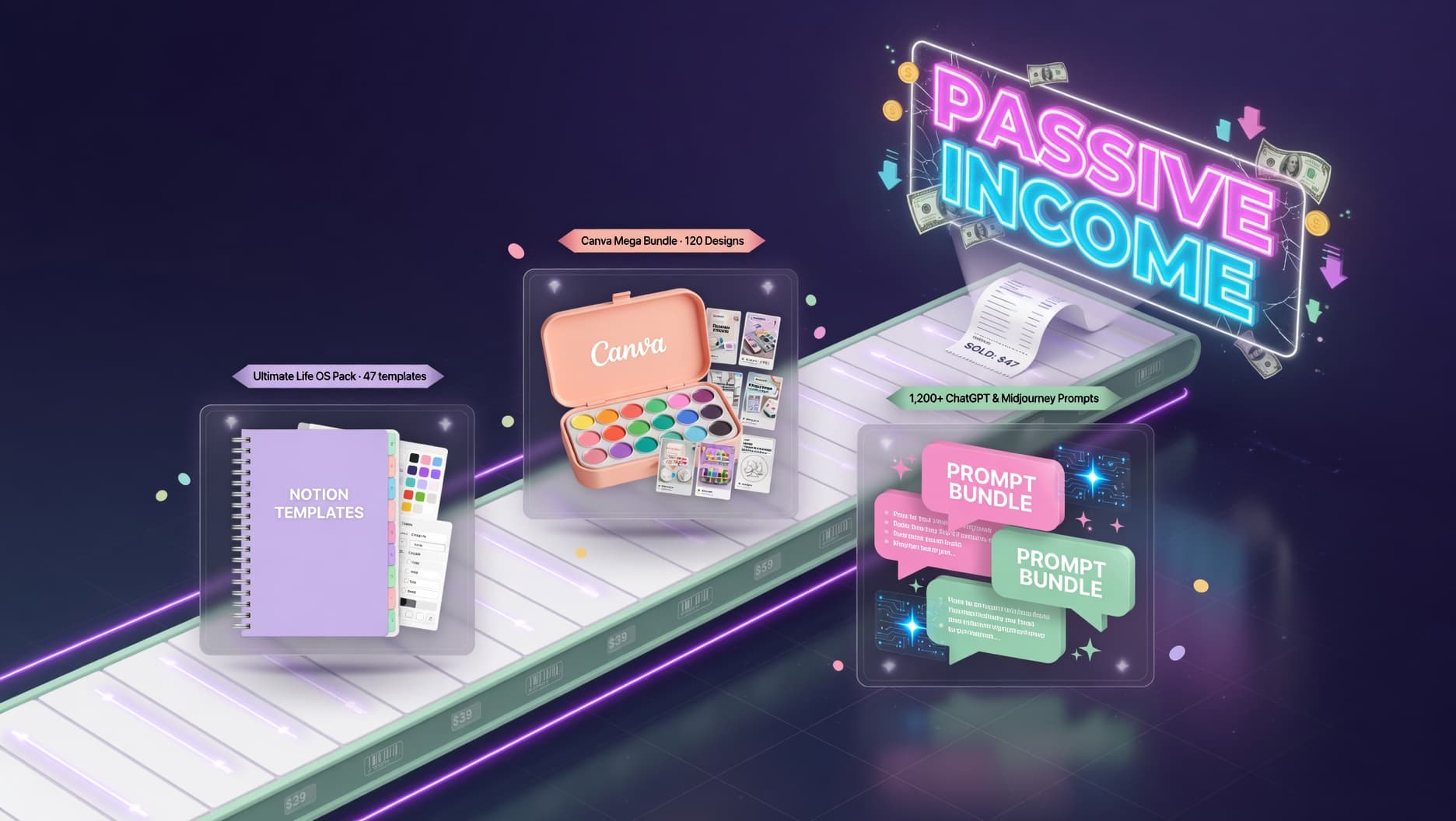
Create and Sell Digital Info Products with AI
Digital products have over 90% margins, no inventory, and scale while you sleep — at least after the setup. AI accelerates research, outlining, copy, and…
KiHustle is free. We fund the site only through affiliate links — support us via the Tools.
Digital products have over 90% margins, no inventory, and scale while you sleep — at least after the setup. AI accelerates research, outlining, copy, and design so strongly that a focused solo founder can go from problem to sellable solution in two weeks.
Many beginners' mistake: they produce first and ask later whether anyone will pay. This guide flips the order: validate, build, launch, measure.
Product types
Not every format fits every audience. Orient yourself toward what your customers already spend money on or where they regularly lose time.
Notion templates work for freelancers, teams, and niche professions (e.g., trades, coaching, agencies). The value lies in structure and repeatability, not pretty pages.
Mini-courses (Gumroad, Lemon Squeezy, your own site) work when you promise a clear outcome: "In 90 minutes from X to Y." AI helps with scripts, slides, and worksheets.
Prompt packs only sell when they're industry-specific ("200 prompts for real estate agents"), not as generic collections.
Checklists and SOPs are ideal for operational problems: onboarding, customer communication, quality assurance. Low design effort, high utility.
Choose one format for your first launch. Expansions come from customer feedback, not gut feeling.
The 14-day launch
The timeframe is deliberately tight: it forces focus and prevents months of perfecting without sales.
Phase 1 (Days 1–3)
In the first three days, define target audience and pain point. Write in one sentence: "I help [audience] solve [problem] so that [measurable result]."
Validation beats theory: run five short interviews (20 minutes) or a survey with 30–50 participants in your niche. Don't ask "Would you buy?" — ask "What did you last spend money or a lot of time on for this problem?"
With AI you can cluster interview notes and extract recurring phrases. AI doesn't replace the conversation — it structures your insights.
Deliverable Day 3: One-page offer sketch (problem, solution, format, price range €19–49 to start).
Phase 2 (Days 4–10)
Now the product is built. Let AI suggest a detailed outline, then manually cut it down to essentials. Rule: everything that doesn't directly lead to the promised outcome gets cut.
Days 4–6: Create copy, video scripts, or template logic. Work in blocks: AI rough draft first, then add your examples, screenshots, and warnings.
Days 7–9: Design in Canva or Figma — consistent colors, readable typography, export as PDF/Notion duplicate.
Day 10: Send beta to two or three people from Phase 1. Incorporate feedback, not everything.
Quality here means: immediately usable, not academically complete.
Phase 3 (Days 11–14)
Days 11–12: Landing page (Carrd, Framer, WordPress) with clear headline, three benefit points, social proof (beta quotes count), and payment button.
Day 13: Test payment provider (Stripe via Lemon Squeezy/Gumroad, or direct) — buy once yourself.
Day 14: Launch on LinkedIn and X with a concrete hook ("I saved X hours per week by…") plus link. No generic "New product live."
After launch: note every question from buyers — that's material for version 2 or an upsell.
Pricing
Start at €19–49 for your first product. A lower entry point reduces purchase friction and delivers reviews and testimonials faster.
Raise the price only when you have at least ten paying customers and feedback is mostly positive. Typical stages: €49 → €79 → €99, each with noticeable added value (bonus module, template, short call).
Psychology: Price communicates positioning. Too cheap feels like a toy; too expensive without proof creates skepticism. Show before/after or time saved in euros.
Bundles (e.g., template + checklist + short video) increase cart value without building a completely new product.
Metrics
What you don't measure, you don't optimize. Four KPIs are enough at the start:
Landing page conversion rate: Visitors to buyers. Target for a warm launch (LinkedIn audience): 2–5%. Below 1%: revise headline, benefits, or price — don't buy more traffic.
Refund rate: Should stay under 5%. Higher indicates wrong expectations or quality gaps.
Traffic source: Where do buyers come from? Double down on what works.
Customer feedback: Two questions after purchase: "What helped you most?" and "What was missing?"
AI can cluster themes from reviews; you set the priorities.
Conclusion
Digital products with AI aren't passive income on day one — they're front-loaded work with leverage later. Those who take niche, validation, and a clear 14-day plan seriously have realistic chances of €500–3,000 monthly after several months of catalog building.
Your next step: Note your target audience today and schedule one interview. Everything else follows from real demand, not the fiftieth template idea.
Before you click away
Most people don't fail from lack of knowledge — they fail by chasing too many paths at once. Take two minutes and check if this direction is really yours.